

What Makes Thermal Labels for Shipping Reversible and Reliable?
By hqt
The moment a dock door rolls up, warm air floods in and the clock starts on product integrity. From chilled warehouses to multi-stop delivery routes, small temperature swings can decide whether a shipment arrives saleable or spoiled. Thermal Labels for Shipping give teams an instant, visual read on those shifts - without batteries, readers, or complicated setup. By using reversible temperature indicators, they show when conditions drift and switch back when the environment recovers, making real-time monitoring both simple and dependable.
What Makes Reversible Thermal Labels Work Reliably
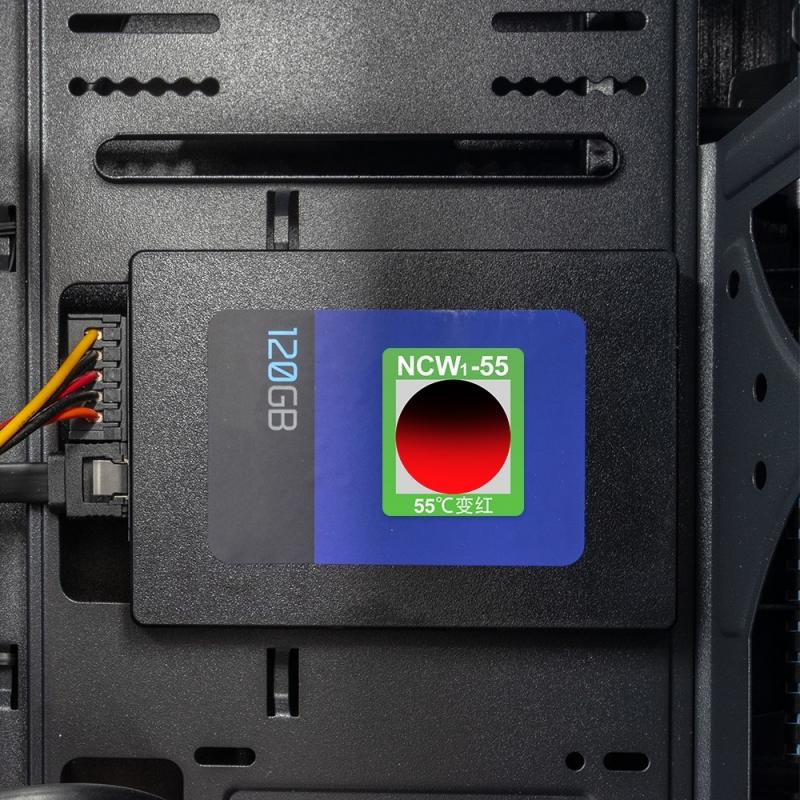
Reversible indicator labels rely on specialized thermochromic materials - inks and films that change color when they cross preset temperature thresholds. Unlike single-use, irreversible spots that "trip” once and stay that way, these indicators transition back as temperatures return to the acceptable range. That reversible behavior allows continuous observation through every handoff, door opening, and route delay.
Reliability pillars:
• Event capture speed: Rapid chemical response reduces false negatives on short excursions.
• Inspection clarity: Strong color contrast lowers interpretation variability and recheck rates.
• Tough construction: Face materials and adhesives are selected to tolerate cold, condensation, vibration, and routine handling common in logistics.
Because there's no circuitry involved, you don't need to charge, calibrate, or pair devices. The label becomes a live signal that any driver, tech, or receiver can interpret in seconds.
Why Real-Time Color Change Matters on the Road
Temperature excursions are often transient. A pallet parked under a heater vent for five minutes can warm faster than a sensor buried in the middle of the load. Reversible labels turn those invisible swings into visible cues right where people make decisions.
They help you:
• Monitor continuously across the whole route: From cross-dock transfers to last-mile delivery, the label tells the story of conditions as they happen.
• Act immediately: Drivers can reseal doors, move pallets, or escalate issues the moment a color change appears.
• Complement digital tools: They provide instant visual proof when you don't have time to download a logger - and a quick confidence check to validate what instruments report.
For cold chain goods - vaccines, biologics, chilled foods, high-value reagents - direct visual feedback reduces spoilage risk, smooths handoffs, and reinforces standard operating procedures.
Where Thermal Labels for Shipping Deliver Value
• Healthcare And Pharma
Specialty medications and vaccines demand tight temperature control from pharmacy to patient. Thermal Labels for Shipping allow nurses, pharmacists, and couriers to confirm conditions at pickup and delivery without opening containers. During audits or routine checks, the reversible color state shows whether packages stayed within range, supporting documentation needs in clinical settings and pharmacy workflows.
• Food, Grocery, And Logistics
Fresh produce, meat, seafood, and dairy depend on temperature stability throughout HACCP checkpoints. At receiving docks, teams can scan pallets and cases for quick pass/fail decisions. Along multi-stop routes, where frequent door openings cause brief warm-ups, a color shift warns drivers to adjust load placement or shorten dwell times. For grocers and meal-kit providers, visible indicators streamline quality assurance without adding new devices.
• Electronics, Research, And Specialty Materials
Sensitive components and reagents can degrade when exposed to heat or excessive cold. Thermal Labels for Shipping give labs, OEMs, and contract manufacturers a quick way to verify materials stayed within limits, minimizing the risk of latent defects and invalid trials.

Deployment Tips: Application, Placement, and Training
Monitoring is effective only when it's simple to see and act on. Follow these practices for better results:
• Use the right adhesive: Freezer-grade for cold, humid environments; general-purpose or high-tack for rough or recycled cartons.
• Pick a durable face stock: Synthetic films better tolerate condensation, scuffs, and tears than paper during long trips.
• Mounting: Choose exterior, flat real estate that handlers can see without turning the package.
• Embed standard placement in SOPs to reduce variability and speed QC checks.
• Control signal bias by placing away from heater vents, solar gain areas, and evaporator discharge.
• Close the loop with a state-based action and logging protocol.
Specify materials proven to endure vibration, moisture, UV, abrasion, and impact; review performance quarterly.
Route conditions: Expect friction, load movement, and condensation as freight moves through temperature ranges. The materials behind reversible indicators are designed to stay functional throughout.
Look for:
• Moisture resistance: Condensation can wash out print and color; water-resistant designs keep indicators clear.
• Abrasion performance: A light laminate or sturdy film guards the active area without dampening visibility.
• UV stability: In bright yards or curbside drops, UV-stable inks keep transitions accurate under sun.
• Printability: If barcodes or lot info share the label, ensure compatibility with your thermal printer and ribbon.
Real durability reduces replacements, prevents missed cues, and ensures consistent reads from origin to destination - local or global.
Audit, Compliance, and SOP Integration
Audits run faster when proof is visible. Thermal Labels for Shipping provide instant status during walk-by checks, letting teams record conditions without opening cartons or pausing production. In high-volume warehouses, that saves minutes per pallet; on the road, it signals drivers to intervene if temperatures drift.
Because they fit seamlessly into checklists, labels bolster compliance in healthcare, food safety, and industrial settings. Integrate into SOPs for receiving, storage, and transport:
• Define acceptable color states for pass/fail.
• Capture exception events with photos to keep a traceable audit record.
• Pair labels with digital temperature loggers on critical corridors, using the label as an instant visual cue.
This mix of visual checks and written documentation supports audits and external inspections without slowing routine work.
Choosing the Right Thermal Labels for Shipping
No two routes or products are alike. A city sprint isn't a cross-border pharma move. Choose labels with:
• Temperature window: Reversible thresholds in the safe range.
• Sensitivity/hysteresis: Fast response, stable readings.
• Size/visibility: Readable from a few feet.
• Adhesive: Surface and condition-matched.
• Face stock: Moisture- and scuff-resistant.
• Printing: Printer/ribbon fit confirmed.
• Compliance: Materials aligned to sector standards.
• Pairing strategy: For investigations, consider combining reversible labels with a small irreversible spot indicator on critical lanes to capture single events while maintaining live visibility day to day.
Get Started With a Low-Risk Pilot
A short pilot is the fastest way to prove value. Pick one or two representative routes - a refrigerated lane with multiple stops and a high-value, long-haul shipment. Rollout basics: Standardize label placement, teach pass/fail cues, and record the actions taken when colors change.
Pilot steps:
- Trial a mixed sample pack in city, regional, and cross-border lanes.
- Placement map for repeatable application.
- Before/after photos at pickup/delivery.
- Compare spoilage, delays, inspection time to baseline.
- Gather user feedback.
- Result: Fewer surprises, faster handoffs, tighter control - often in a week.
- Scale: Bulk pricing; bake into SOPs, training, vendor specs.
- Value: A reversible, easy-to-read signal that cuts waste and protects sensitive goods.


- Adhesive Inkjet transparent
- Agodeo inkjet vinyl sticker paper
- AIVA printable vinyl sticker paper
- best inkjet vinyl sticker paper for outdoor use
- cheap printable vinyl sticker paper for outdoor use
- cold chain temperature indicator
- color-change temperature sticker
- Cricut vinyl sticker paper inkjet
- custom vinyl sticker printing
- DIY sticker paper sheets
- durable waterproof sticker paper for inkjet printers
- electronics temperature sticker label
- glossy inkjet vinyl sticker paper
- hot equipment warning sticker
- industrial temperature indicator label
- inkjet sticker paper for Cricut
- matte inkjet sticker paper
- medical temperature indicator sticker
- multi-point irreversible temperature sticker
- Neato vinyl sticker paper
- one-time temperature indicator label
- orajat 1917 printable vinyl
- peak temperature measurement label
- printable vinyl for car decals
- printable vinyl for laptop stickers
- printable vinyl for scrapbooking
- professional quality inkjet vinyl sheets
- reversible temperature monitor label
- self-adhesive printable vinyl
- shipping temperature indicator label
- Tear-resistant sticker paper
- temperature indicator for food safety
- temperature monitoring sticker for transport
- transparent label sticker
- vinyl sticker paper for labels
- waterproof printable vinyl paper
- where to buy inkjet vinyl sticker paper