

Seamless MES Integration: How High Temperature Barcode Labels Power Industry 4.0 Tire Traceability
By peter, ren
The High Temperature Barcode Labels perform an essential function in relation to a tire factory's MES (Manufacturing Execution System) and the Industry 4.0 roadmap. When a label is not able to print, scan, or survive the vulcanization oven, the whole digital traceability chain is broken and leads to a situation where there is manual data entry and/or an complete halt in production, and (or) in the worst case scenario) there is a costly disruption in the automated workflows.
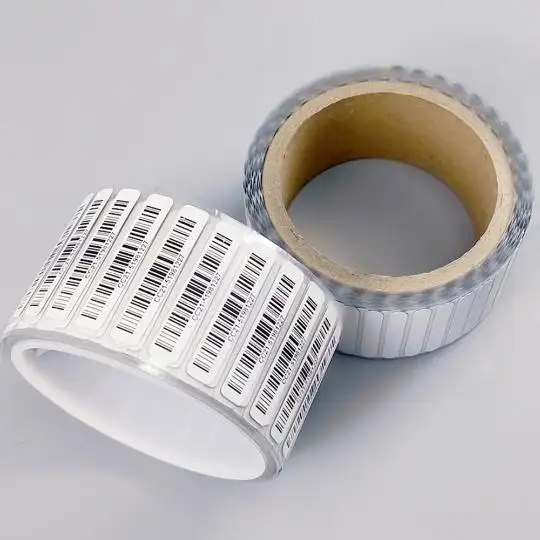
Crystal Code has designed and integrated an industry first CC - TV - 1A Vulcanization Barcode Tire Label to not only survive extreme heat, but to also connect with the latest and most advanced MES systems, barcode printer, and vision systems. Below are the various ways in which the label is able to assist in turning a curing press into a smart and connected data node.
The MES Bottleneck: When Labels Become the Weak Link
Crystal Code's high-temperature bar-code labels are designed to work with tire manufacturers' MES systems (see how MES improves OEE) designed to optimize their processes and increase OEE metrics. Each label is designed to work with the barcode scanning and to be able to do real time updates on the inventory, quality records, and work orders with no interruptions. What does MES expect from the labels to work with it without interruptions?
•Labels that are designed to withstand the high-temperature vulcanization process.
•The labels have been meticulously designed and tested to prevent any adhesive leakage, and are calibrated to withstand thermal cycling.
•Labels that are designed to withstand label lifting, and are calibrated so that no deflections, bends, or pops occur.
Crystal Code successfully addresses the above issues with design-for-automation engineering, which drives the point home that our High Temperature Barcode Labels work with your MES, not against it.
MS-driven tire lines are anticipated to operate high-speed thermal transfer printers (Zebra, Sato, Honeywell, TSC), MES-driven tire lines automate the placement and application of labels. Each label is expected to be able to withstand the application and melting of the carrier film.
Crystal Code's CC-TV-1A label is optimized for these environments:
Works with most carbon resin ribbons: Our white polyester facestock and durable topcoat accept resin formulations from Ricoh, DNP, ARMOR, and others—no re-calibration needed.
Precise 3mm gap detection: Every label roll features consistent 3mm gaps, eliminating misreads that cause printer stops.
Customizable dimensions and cores: Standard 44x8mm or 38x8mm sizes, plus any custom size or core diameter (38mm or other) to match your existing applicator tooling.
By reducing printer downtime and misapplied labels, Crystal Code helps tire plants achieve >99.5% first-pass read rates—a key metric for MES-driven OEE dashboards.
Surviving Vulcanization at 210°C Without Losing Scanability
An MES is only as good as the data entering it. If a barcode becomes unreadable after the curing press, the system loses visibility of that tire's identity. Crystal Code's label is engineered for synchronous vulcanization at temperatures from 130°C to 210°C:
•No deformation or discoloration after curing: The label cures with the rubber, becoming an integral part of the tire—not a surface sticker that burns or shrinks.
•Sharp barcodes and text: Ensured by ISO/IEC 15415, this print quality maintains its integrity under extreme heat and pressure conditions.
•Resists water, acids, alkalis, salts, and petroleum oils: Essential for tires that pass through washing stations, curing mold coolants, and post-cure finishing lines.
This post-vulcanization reliability means your MES receives accurate scans from the curing press all the way to final inspection, warehousing, and outbound shipping.
Strong Adhesion That Lasts the Tire's Entire Lifecycle – No Rework
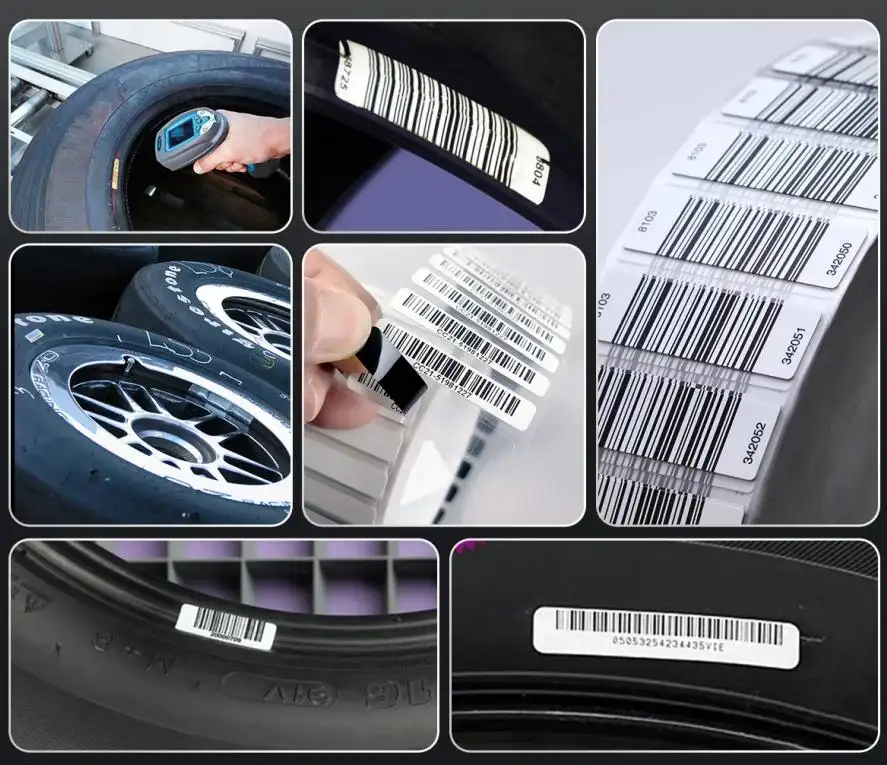
MES integration does not stop at the factory gate. Traceability must extend through distribution, retreading, and end-of-life recycling. Crystal Code uses a rubber bonding adhesive specially designed for vulcanization that chemically fuses with tire compounds:
•Permanent bonding during cure: The label will not lift, curl, or edge-peel—even after years of road use, abrasion, and temperature cycling.
•Resistances to brake fluids and low-fat solvents: These chemicals, commonly found in automotive environments, do not affect the adhesion or printing of the label.
•Survives tire retreading buffing: Even during retreading, the barcode can be scanned, retaining MES history for second-life tires.
This means for MES managers, there can be one singular tire ID that is valid from the green tire assembly all the way to shredding, supporting closed-loop quality tracking and regulatory obligations (such as the EU Tire Labeling Regulation 2020/740).
Barcode Legibility in All Conditions
MES readers positioned in factories operate in some of the most hostile environments. This makes the choice of label materials even more important.
•Moisture and water resistance: Even in post-cure cooling tunnels, high moisture environments, there is no ink bleeding or adhesive hydrolysis.
•Resistances to acids and alkalis: Remain unharmed by the mold-release agents and cleaning agents that occur during production cycles.
•Resistance to petroleum oils and low-fat solvents: These chemicals are commonplace in tire compound and warehouse flooring.
•Resistance to abrasion: Conveyor, tire stack and automated sortation system friction do not cause barcodes to be scuffed.
This durability guarantees the barcodes can be read by both fixed-mount and handheld scanners, which will provide clean MES data without exception handling.
Seamless Printing Automation for Efficient Workflows
Crystal Code doesn't just sell labels; we provide printability data packages which help your automation engineers set printer parameters quickly. Our technical support is available for the following:
•Printer profiling: Optimized darkness, printing speed, and ribbon tension for Zebra, Sato or Honeywell printers.
•We provide options for custom topcoat thicknesses: 0.075 mm, 0.10 mm, 0.15 mm, 0.188 mm, and 0.25 mm, allowing you to customize for your printhead wear and resin transfer needs.
You can simplify inventory management across multiple shifts, as there's no need for special climate-controlled storage for the 3-year storage stability between -5°C to 40°C.
Crystal Code also has Design Professional Packaging and Logistics Global Distribution services, making it easy for your label rolls to arrive within your specifications and be on time, no matter if your business is located in Asia, Europe, or America.
Why is Crystal Code the Best 4.0 Ready Industry Option
As tire factories begin to use digital twins, blockchain for traceability, and AI for defect detection, the simple barcode label will be one of the most important data carriers. Crystal Code will guarantee that High-Temperature Barcode Labels will be the tools that drive smart manufacturing, not the obstacles. Our CC-TV-1A label is already deployed in:
•Passenger and truck tire MES lines
•OTR (off-the-road) tire plants with extreme cure profiles
•Automated retreading facilities using vision-guided sorting
•Tire recycling centers requiring durable ID for pyrolysis tracking
Ready to Connect Your Curing Press to the Cloud?
Stop losing traceability data to label failures. Crystal Code provides sample rolls for on-site printer validation and custom engineering design for specific cure profile or applicator needs. Our team provides printer settings, technical datasheets, and quotes in less than 24 hours.
��� Submit your quote request today, and don't forget your MES platform (SAP MII, Siemens Opcenter, Rockwell FactoryTalk) for custom integration support.Crystal Code — High Temperature Barcode Labels that integrate with your MES, from green tire to end-of-life.


- Adhesive Inkjet transparent
- Agodeo inkjet vinyl sticker paper
- AIVA printable vinyl sticker paper
- best inkjet vinyl sticker paper for outdoor use
- cheap printable vinyl sticker paper for outdoor use
- cold chain temperature indicator
- color-change temperature sticker
- Cricut vinyl sticker paper inkjet
- custom vinyl sticker printing
- DIY sticker paper sheets
- durable waterproof sticker paper for inkjet printers
- electronics temperature sticker label
- glossy inkjet vinyl sticker paper
- hot equipment warning sticker
- industrial temperature indicator label
- inkjet sticker paper for Cricut
- matte inkjet sticker paper
- medical temperature indicator sticker
- multi-point irreversible temperature sticker
- Neato vinyl sticker paper
- one-time temperature indicator label
- orajat 1917 printable vinyl
- peak temperature measurement label
- printable vinyl for car decals
- printable vinyl for laptop stickers
- printable vinyl for scrapbooking
- professional quality inkjet vinyl sheets
- reversible temperature monitor label
- self-adhesive printable vinyl
- shipping temperature indicator label
- Tear-resistant sticker paper
- temperature indicator for food safety
- temperature monitoring sticker for transport
- transparent label sticker
- vinyl sticker paper for labels
- waterproof printable vinyl paper
- where to buy inkjet vinyl sticker paper