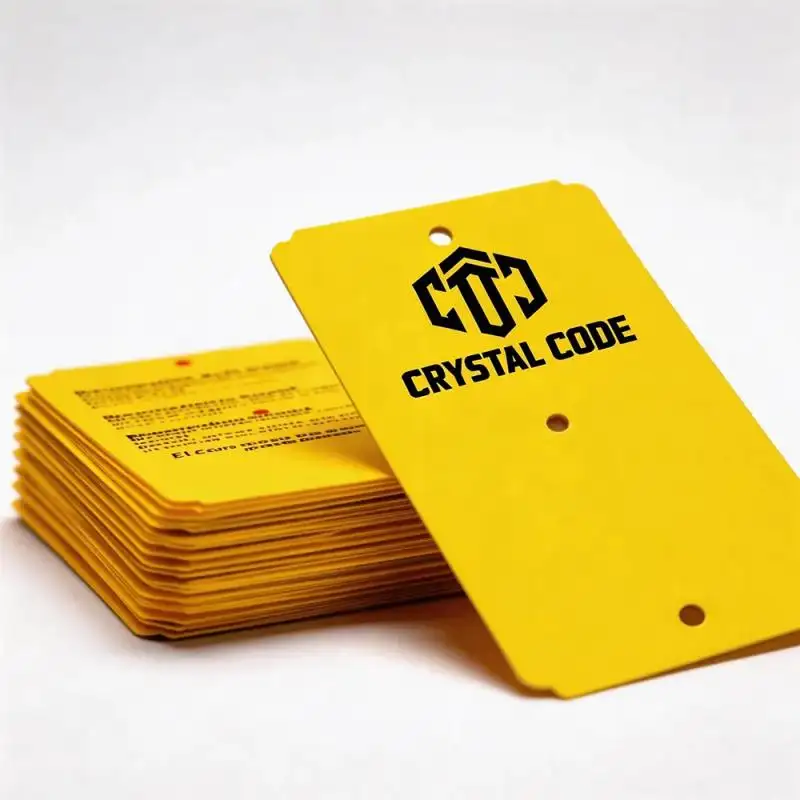


Tire Vulcanization Barcode Labels: Chemical Resistance To ASTM & SAE Fluid Exposure
By peter, ren
Introduction
A Tire Vulcanization Barcode Label that survives the heat of the press but dissolves in the face of road chemicals, brake fluid, or industrial solvents is a traceability failure waiting to happen. For tire manufacturers serving automotive OEMs, construction, mining, and agriculture, chemical resistance is not a "nice to have"—it is a compliance and liability issue.
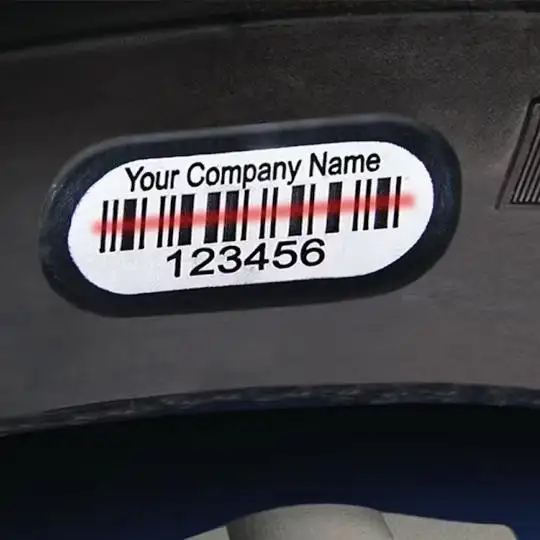
Crystal Code's vulcanized tire label is designed for protection against acids, alkalis, salts, petroleum oils, and low-fat solvents. These labels meet ASTM and ISO standards. This is how our material science integrates with the challenges presented by automotive fluids, while keeping the barcodes functional for the entire life of the tire.
Why We Should Care About the Chemical Resistance of Tire Identification
During her vulcanization, a tire is subjected to a chemically hostile environment. Road salt de-ices the road in winter. Fluid from brakes and engines leak from adjacent vehicles. In the case of industrial tires, chemical hydraulic oils, solvents, and alkaline cleaners fill the air in warehouses and mines. The ISO/TR 7620 standard stipulates that rubber and labeling material be studied exhaustively and systematically for their response to highly aggressive fluids. This includes aggressive contact with acid, base, oil, and solvent. This is the environment that vulcanized tire labels are subjected to throughout their life.
Every tire will inevitably be exposed to fluids. Every tire goes through puddles and chemical spills; in these cases, traceability is lost.
Leading global OEMs and Tier 1 suppliers have a strong focus on compliance and will only accept labels that have documented chemical resistance testing in accordance with standard ASTM D471 and ASTM D543.
Operational data is compromised when the label on the tire degrades because of chemical contact. Quality management systems are weakened, and the ability to manage recalls is compromised.
Key Standards Governing Chemical Resistance for Tire Labels
The procurement and engineering teams are reliant on certain testing methodologies to confirm chemical resistance. Crystal Code's vulcanized tire label is built to meet the most common standards:
ASTM D471 – Effect of Liquids on Rubber: This main standard assesses the effect of certain standardized fuels, oils, and other liquids on rubber and rubber-like substances and their compositions under specific temperature and immersion conditions. For the purposes of testing, the label materials of Crystal Code are compared against reference liquids including IRM 901–903 oils and Reference Fuels A–D.
ASTM D543 – Chemical Resistance of Plastics: This is applicable to the polyester facestock and topcoat, and tests whether there are chemical substances that, when contact is made, will diminish the substance's integrity and will cause the label to lose its structural integrity.
ISO/TR 7620 – Chemical Resistance Classification for Rubber: This technical report offers a classification scheme for the chemical resistance of rubber to acids, alkalis, and water and oil solvents. Crystal Code follows these standards for testing and evaluation.
SAE J2027 – Chemical Resistance for Protective Covers: Though intended for gasoline fuel line tubing, this SAE standard is the first and primary offering for chemical resistance and provides a benchmark for the use of xenon-arc weathering and is often cited in automotive supply chain specifications.
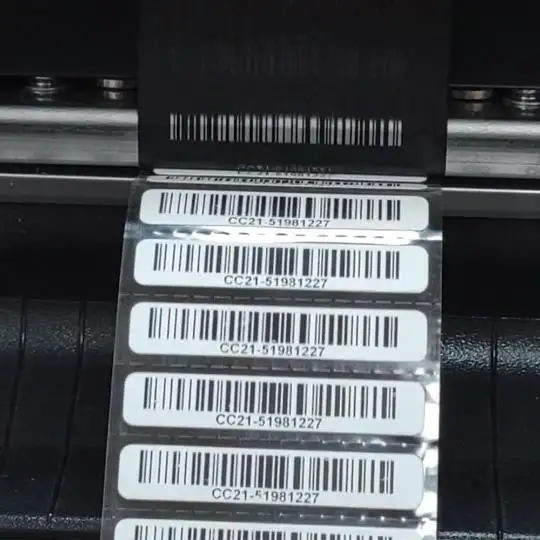
How Vulcanized Labels By Crystal Code Resists Chemical Attacks
The Crystal Code Tire Vulcanization Barcode Label (Model CC-TV-1A) employs rubber-based vulcanizing adhesive and topcoated white polyester facestock. This combination endures both the vulcanization process and years of chemical exposure. An explanation of the performance of the different materials is as follows:
•Chemical Resistance and Dimensional Stability of Polyester Films: Polyester is ideal for off highway and industrial tires as it has ideal dimensional stability and chemical resistance.
•Top-Coat and Chemical and Friction Resistance: The top-Coat provides all the chemical resistance for Crystal Code's prints. The top-Coat provides resistance to acids, alkalis, oil, water, moisture, road salt, and low-fat solvent.
•Adhesive and Chemical Bond: The rubber-based adhesive undergoes a curing reaction during vulcanization and creates a chemical bond, not just a surface reaction, with the green tire's rubber.
•Chemical-Resistant Print and Barcode: After the top-Coat is printed, it creates a chemical bond with the resin of the top-Coat and inhibits any changes of the resin, i.e. smearing, fading, or dissolving of the print when the label is subjected to petroleum-based oils or cleaning products.
•Top-Coat: Closure for Chemical Wicking: The label's top coat is smooth and durable so it prevents aggressive chemical wicking to the adhesive layer.
•Moisture Resistance: Outdoors Operating Tires. The label survives prolonged moisture exposure without delamination and they can be placed on tires stored outdoors or operating in tropical weather.
•Salt Resistance Protects Against Winter Road Chemicals: For tires bound for North America and Europe, the ability to resist sodium chloride and magnesium chloride de-icing salts is confirmed by immersion testing.
•Resistance to Grease and Solvents Allows the Use of These Tires in Industry: Tires for mining, construction, and agriculture come into constant contact with hydraulic fluids and low-fat solvents; the label of Crystal Code resists both, and there is no loss of legibility or adhesion.
Testing Justification: How Crystal Code Demonstrates Chemical Resistance
Claims of chemical resistance must be substantiated, and Crystal Code subjects each batch of vulcanized labels to rigorous testing.
•Immersion testing in accordance with ASTM D471: Samples of the labels are immersed in pre-determined test liquids (oils, fuels, solvents) at a controlled temperature for a set amount of time. Afterward, the samples are tested for mass loss and gain, volume loss and gain, tensile strength, and dimensional stability.
•Scanability After Chemical Exposure: Following exposure to the test liquids, the barcodes are scanned to determine if they meet the required contrast and readability minimums as specified in ISO/IEC 15415. Crystal Code is proud to maintain a greater than 99% pass rate.
•Retention of Adhesion Following Chemical Exposure: 90° peel adhesion tests are performed prior to chemical exposure and after chemical exposure to verify that the rubber based adhesive has maintained its adhesion, with most samples having a bond strength greater than 8 N/25 mm on HDPE substrates.
Why Chemical Resistance Will Be in Demand in 2026
Documentation of chemical resistance is quickly becoming a must-have for tire-industry procurists. Here's why.
•End-of-Life Mandates for OEM Traceability: Automotive manufacturers are now instituting complete lifecycle traceability, which means that labels must endure a minimum of several years of fluid exposure and then some.
•The Circular Economy and Retreading depend on Traceability: Evidence of a label that has chemically broken down on a tire carcass prevents retreaders from knowing the history of the carcass, and this connects to the EU Tire Labeling Regulations.
•The Risks of No Traceability Are Growing: Traceability on recalls is an issue for manufacturers in terms of compliance costs, the wet blanket effect on their reputation, and loss of control, all of which can be circumvented with chemically resistant labels.
There Are Increasingly Unified Testing Standards: With the rise of global tire trading, there is a need for documented proof of chemical resistance testing to be provided (regardless of it being ASTM or ISO) for seamless supplier approval across different regions.
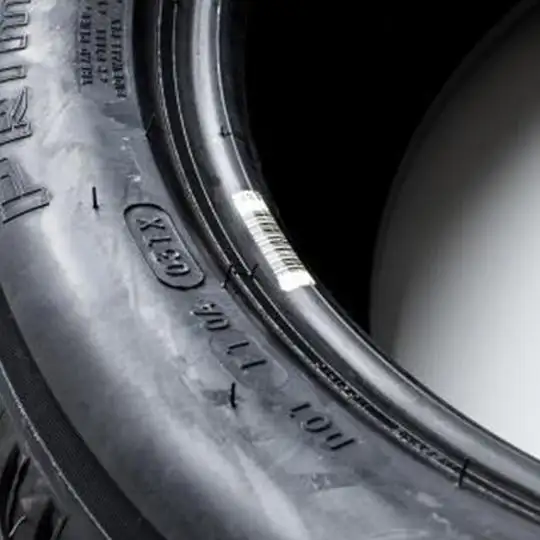
Final Take Away: Specify Chemical Resistance First
For the procurement engineer and production manager, the question is no longer whether your Tire Vulcanization Barcode Label is heat resistant. It is whether it can withstand everything that comes after the heat.
Crystal Code's vulcanized tire label delivers verified resistance to acids, alkalis, salts, petroleum oils, and low-fat solvents, backed by ASTM D471 and ISO/TR 7620 testing. Whether you manufacture passenger car tires, OTR earthmovers, or aircraft radial tires, our labels remain scannable from the press to the pavement—and beyond into retreading.
Send a quote request with your chemical exposure profile and vulcanization temperature range. Crystal Code will provide test data, samples, and compliance documentation within 48 hours.


- Adhesive Inkjet transparent
- Agodeo inkjet vinyl sticker paper
- AIVA printable vinyl sticker paper
- best inkjet vinyl sticker paper for outdoor use
- cheap printable vinyl sticker paper for outdoor use
- cold chain temperature indicator
- color-change temperature sticker
- Cricut vinyl sticker paper inkjet
- custom vinyl sticker printing
- DIY sticker paper sheets
- durable waterproof sticker paper for inkjet printers
- electronics temperature sticker label
- glossy inkjet vinyl sticker paper
- hot equipment warning sticker
- industrial temperature indicator label
- inkjet sticker paper for Cricut
- matte inkjet sticker paper
- medical temperature indicator sticker
- multi-point irreversible temperature sticker
- Neato vinyl sticker paper
- one-time temperature indicator label
- orajat 1917 printable vinyl
- peak temperature measurement label
- printable vinyl for car decals
- printable vinyl for laptop stickers
- printable vinyl for scrapbooking
- professional quality inkjet vinyl sheets
- reversible temperature monitor label
- self-adhesive printable vinyl
- shipping temperature indicator label
- Tear-resistant sticker paper
- temperature indicator for food safety
- temperature monitoring sticker for transport
- transparent label sticker
- vinyl sticker paper for labels
- waterproof printable vinyl paper
- where to buy inkjet vinyl sticker paper