

Chemical Resistance vs. High Heat: Why Industrial High Temperature Tags Must Survive Both
By peter, ren
Industrial High Temperature Tags are often selected based on temperature ratings alone—yet in real-world metal processing, chemical finishing, and autoclave operations, chemical exposure destroys tags long before heat does. For procurement managers and plant engineers in steel mills, aluminum foundries, aerospace manufacturing, and sanitary ware production, a tag that survives 800°C but dissolves in pickling acid delivers zero traceability value.
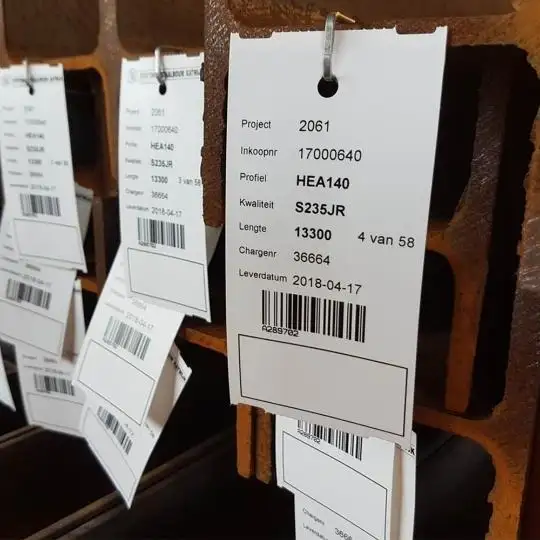
Crystal Code has engineered a product line where chemical resistance is not an afterthought but a core specification—engineered alongside extreme heat tolerance.
The Hidden Reality: Chemical Attack Destroys More Tags Than Heat
In steel pickling lines, sulfuric and hydrochloric acids attack label adhesives and substrates even after the metal has cooled from furnace temperatures.
In aerospace chemical milling, solvent vapors and alkaline etchants degrade standard polyimide tags within hours.
In ceramic glazing and sanitary ware production, acidic glaze residues combined with kiln heat create a corrosive environment that defeats most "high-temperature only" labels.
In autoclave sterilization, high-pressure steam carries alkaline detergents that penetrate label edges and cause delamination.
According to industry data from InfoSight Corporation, tags used in metal rod and wire processing must remain readable even after pickling and hot acid baths—a challenge that eliminates most polyimide labels not specifically engineered for dual protection. Crystal Code's CC-ST-40 and CC-ST-60 models are designed precisely for such environments, combining high-heat tolerance with active chemical resistance that keeps barcodes scannable through multiple process stages.
Why Polyimide Alone Is Not Enough: Crystal Code's Layered Defense
Many manufacturers stop at polyimide as the "high-temperature solution." But standard polyimide—while thermally stable up to 260–350°C—degrades under prolonged exposure to sulfuric acid, hydrochloric acid, caustic cleaning solutions, or industrial solvents used in metal finishing. Crystal Code uses a multi-tiered strategy with three separate levels of materials:
•CC-ST-40 (up to 400 °C): Pure polyimide with a sophisticated enhanced formulation for chemical resistance against acids—great for pickling lines and baths for cleaning metals.
•CC-ST-60 (up to 600 °C): Polyimide + aluminum foil interlayer; the foil serves to keep chemicals from penetrating and to reflect heat.
•CC-ST-80 (up to 800 °C): Full stainless steel substrate—impassive to almost all industrial chemicals (acids, bases, solvents); mechanically strong; and is suited to harsh conditions like anoxic and chemically aggressive environments where organics are prohibited.
ASTM D543 Compliance—Chemical Resistance Testing Done Right
Standards for the industry are important for the validation of procurement. ASTM D543 is the worldwide accepted standard for testing the resistance of plastics and polymers to chemical substances. Crystal Code applies ASTM D543 for all CC-ST series tags, and the testing standards are documented. Some of the important testing results are:
•No surface degradation and barcode degradation < 85% for CC-ST-40 and CC-ST-60 in 72 hours of immersion testing with sulfuric acid
•No adhesive failure in 48 hours of immersion testing with sodium hydroxide under 5% concentration and white background degradation >90% in reflectivity.
•All CC-ST models stayed fully legible in the coating and print after 100 cycles of isopropyl alcohol and acetone wipe test.
•Salt spray (ASTM B117, 200 hours): No corrosion or discoloration on stainless steel CC-ST-80 tags.
How Chemical Corrosion Kills Barcode Readability and Automation
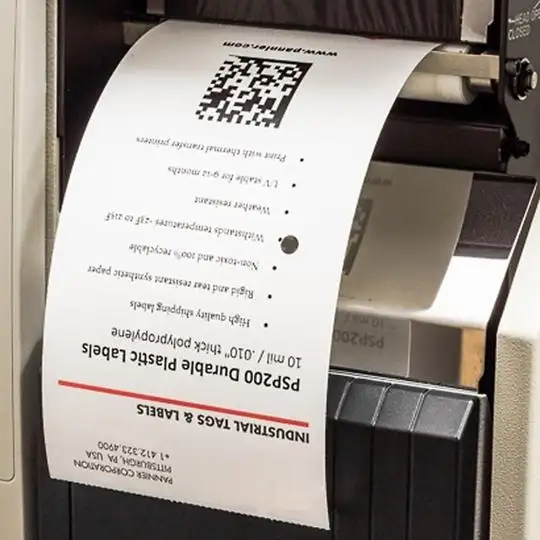
Automated traceability depends on high-contrast, unscratched barcode surfaces. Chemical attack does not always fully dissolve a tag—often, it causes surface etching, discoloration, or hazing that reduces the contrast ratio below scanner tolerance. Standard labeling materials quickly deteriorate in corrosive chemical environments, extreme temperatures, and high friction. All CC-ST models feature a white surface that discolors less than standard label materials, which means it retains over 90% refractivity after chemical exposure. This means the following operational improvements can be seen:
•Fewer Scan Failures: Crystal Code tags help automated optical readers (OCR and barcode scanners) achieve first-pass read rates above 99%.
•No Manual Relabeling: Save approximately 15–30 minutes for each batch relabeling after a batch of chemically degraded tags.
•Audit-ready Traceability: Traceability of tags remains digitally intact from the time it was casted until the time it was shipped, despite the tags being unreadable.
Food Processing and Autoclave Sterilization: Where Steam and Chemicals Combine
The metal, ceramic and sanitary ware, food processing, and medical autoclave cleaning industries share a common risk with high-pressure steam and cleaning chemicals. Steam that is in the 121–135°C range that is used in autoclaves is able to destroy label adhesive and substrates.
The CC-ST-25 and CC-ST-40 models are designed to operate in these conditions. Most heat-only label solutions are eliminated from the field of labels used for food and autoclaves that have high-temperature, high-moisture and high-chemical cleaning environments. Application success includes:
•Medical devices: CC-ST-40 tags resist print fading for over 50 autoclave cycles (121°C, 15 psi, alkaline detergent rinse).
•Frozen meals: CC-ST-25 tags can withstand extreme temperatures, from flash freezing (-40°C) to a high-heat (250°C) oven, and withstand caustic washdowns.
•Ceramic kiln: CC-ST-60 tags are still able to be read by automated sorting after maintaining barcode chemical and high-heat (600ºC) glaze at 600ºC.
The Cost of Under-Specifying: Tag Failures Cause Production Halts
The direct costs associated with a faulty tag are trivial compared to the indirect costs of re-manual identification, delays caused by batch tracing, findings from compliance audits, and potential product recalls, which can be thousands of dollars. In the digitization of processes in the metal industry, the Fraunhofer IKTS explains that a primary reason for the absence of end-to-end traceability is the high processing temperatures (up to 1300°C) and the poor thermal and chemical resistance of coding materials. Crystal Code removes this obstacle by offering a chemical resistance that is matched to the application. Apply this selection guide to your situation:
•For pickle lines and acid baths, select CC-ST-40 or CC-ST-60, which have resistance to sulfuric and hydrochloric acids.
•For alkaline cleaning and galvanization, select CC-ST-60 (aluminum foil barrier) or CC-ST-80 (stainless steel) for complete chemical inertness.
•For steam sterilization and CIP washdowns, CC-ST-25 or CC-ST-40 are recommended, with proven moisture/steam resistance.
•For reductive atmospheres and exotic chemicals, select CC-ST-80 stainless steel, as it is the only material that remains stable under hydrogen annealing and aggressive solvent conditions.
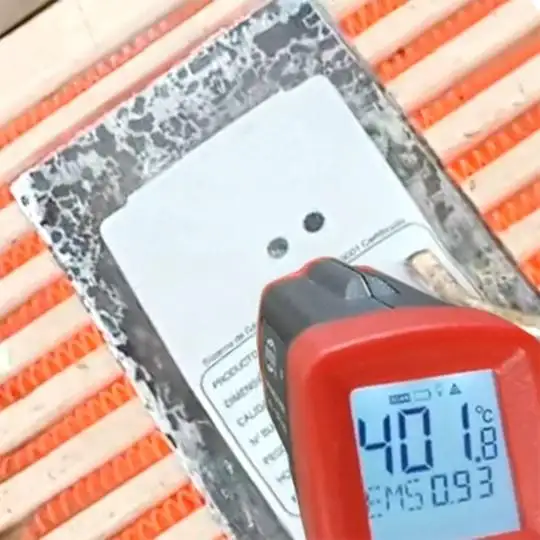
Future-Proofing Traceability with Crystal Code's Tiered Chemical-Resistant Portfolio
Traceability solutions with global high-temperature labels and tags market valuation of USD 510 million in 2024 and USD 815 million in 2032 with a CAGR of 5.3% is driven by Industry 4.0 automation and more stringent regulations across metals, aerospace, and food processing sectors. This means that the more advanced the production line, the more the tags that survive heat and chemicals. Crystal Code's CC-ST series meets this incremental backward trend with a com-prehensive approach of 250° to 800° with chemical resistance across the entire range.
Additional key benefits to Crystal Code's CC-ST series tags that stay ahead of industry trends include:
• Full colour, variable-data printing, anywhere on the chemical resistant substrate: Supports unique serial numbering, batch coding, 1D/2D barcoding, logo, and the likes.
• Heat-activated adhesive option (CC-ST-80) to be applied directly to hot metal (up to 800°C) means no more bottlenecks in production.
• Shatter resistant construction. CC-ST-25 and CC-ST-40 survive thermal shock as well as an impact; the tags stay in place longer.
• Supporting global logistics; readily available in advance for customized logistics.
Dual-Threat Tag Failures Are Ready to Go Right?
1) Record the Max temperature, chemicals (type, concentration, duration of exposure) and method(s) of bonding the substrate and tags.
2) Crystal Code's engineers prepare the quote.
3) Test data (equivalent to ASTM D543) specific to the chemical and a proposed CC-ST series tag.
Technical datasheets for CC-ST-40 (acid resistant) and CC-ST-80 (stainless steel) tags can be obtained by reaching out to our support team and placing your request. Share this guide with your operations and quality managers to align on chemical-resistance specifications for high-temperature tagging.*


- Adhesive Inkjet transparent
- Agodeo inkjet vinyl sticker paper
- AIVA printable vinyl sticker paper
- best inkjet vinyl sticker paper for outdoor use
- cheap printable vinyl sticker paper for outdoor use
- cold chain temperature indicator
- color-change temperature sticker
- Cricut vinyl sticker paper inkjet
- custom vinyl sticker printing
- DIY sticker paper sheets
- durable waterproof sticker paper for inkjet printers
- electronics temperature sticker label
- glossy inkjet vinyl sticker paper
- hot equipment warning sticker
- industrial temperature indicator label
- inkjet sticker paper for Cricut
- matte inkjet sticker paper
- medical temperature indicator sticker
- multi-point irreversible temperature sticker
- Neato vinyl sticker paper
- one-time temperature indicator label
- orajat 1917 printable vinyl
- peak temperature measurement label
- printable vinyl for car decals
- printable vinyl for laptop stickers
- printable vinyl for scrapbooking
- professional quality inkjet vinyl sheets
- reversible temperature monitor label
- self-adhesive printable vinyl
- shipping temperature indicator label
- Tear-resistant sticker paper
- temperature indicator for food safety
- temperature monitoring sticker for transport
- transparent label sticker
- vinyl sticker paper for labels
- waterproof printable vinyl paper
- where to buy inkjet vinyl sticker paper