

Smart Temperature Monitoring Tag: Reusable Vision For Pharma, Food & Logistics
By peter, ren
A Temperature Monitoring Tag that works once and then gets thrown away is not just inefficient—it's costly for your bottom line and the planet. Crystal Code's Reversible Temperature Indicator Label changes that. This smart label was built for multiple monitoring cycles. A smart label can reverse its change once conditions return to normal. For pharmaceutical, food, and logistics buyers in 2026, this will reduce waste, provide simple compliance, and replace the need for electronics with real-time visibility.
The Cost of Disposal Mentality in Cold Chain Monitoring
Over 10 billion RFID tags are used globally each year, and the vast majority are single use and end up in landfills. In food logistics, thousands of fully functional battery powered sensors are thrown away after single use and shipments.
For single use monitors to work, the costs are:
•Environmental: They produce unprecedented electronic waste and are neither recycled nor biodegradable.
•Operational: They must constantly purchase new tags for shipments in order to keep their product moving efficiently in the pharmaceutical and food supply chains.
•Compliance: For up to the minute monitoring, without leaving the product use and safety compliance, the tags must also not leave the regulatory lags.
Monitoring the cold chain has grown rapidly to a projected $9.12 billion in 2026 from $7.96 billion in 2025. But growth does not provide a solution. Most tags are still designed to be disposed of. This is in The Smart Approach.
How A Reversible Temperature Monitoring Tag Works
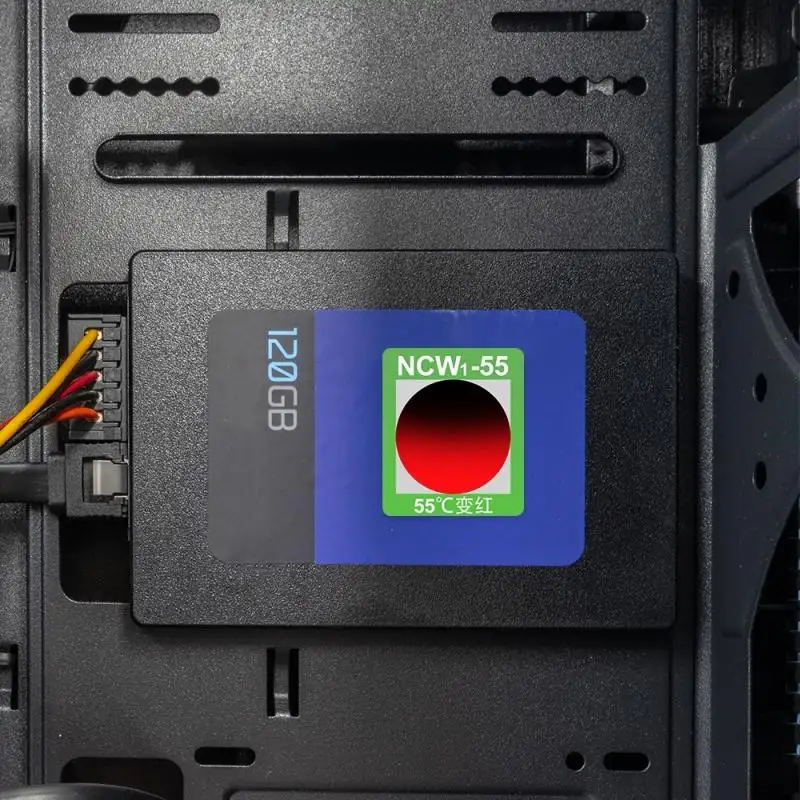
When the monitoring tag demonstrates a, up to a preset, rise or fall in temperature, the tag will change its color. Once the temperature returns to a normal range, the tag will automatically revert.
•Accurate & Reversible Detection: Enables monitoring of all heating and cooling events during multiple journeys, as detection always reverts to record normal temperature events.
•High Sensitivity & Fast Response: Because the materials of the label are durable and heat-sensitive, they will quickly respond to any small temperature differences that occur to avoid damage to the most sheltered of cargo.
•No Electronics, No Batteries: This label will never need software to read power, like RFID sensors or data loggers, and never runs out of power. All that is needed to read it is a quick visual check.
•Instant Readability: Readability is immediate to everyone on the receiving dock and the warehouse floor, and does not need formal training or specialty tools to read the color change.
This simplicity is a major advantage. Chemical temperature indicators are increasingly recognized as a reliable supplement to classic cold chain monitoring—especially where a quick visual inspection is crucial.
Pharmaceuticals: Protecting Potency, Preserving Inventory
For pharmaceutical distributors, a single temperature excursion can render an entire batch of biologics or vaccines useless. Leading the market then was the global cold-chain delivery market which was anticipated to reach $112.6 billion in 2026 due to the increasing demand for temperatur sensitive Biologics and mRNA therapies.
•Vaccine storage at every stage: With the World Health Organization (WHO) recommendation for maintaining the cold chain, every vaccine clinics has been assigned a unique reversible label for clinics to visually check beforehand (go/no-go) and ensure proper vaccine handling and storage.
•Optimal Good Distribution Practice (GDP) compliance: GDP dictates the requirement for storage temperature to be tracked, and storage conditions to be documented. This eliminates signification time and complexity of a reversible label as it offers a documented visual trail that meets audit standards.
•Less vaccine loss: Vaccine loss due to cold chain breaches or the often-occuring re-thermalization of cold chain storage, has been estimated to reach in excess of 50%. The high cost of storage and re-thermalization in remote areas, with the right reversible label and with low storage costs, has been catch loss.
Less discarded shipments and less costs to monitor (measured in shipments) ultimately leads to the intended goal of receiving the most doses by patients (measured in shipments).

Food Logistics: Cutting Waste From Farm to Fork
During the transportation of most food items, temperature disruptions lead near every loss in food quality and ultimately the safety of that food. The FSMA has led most food retailers to require temperature data be tracked throughout the food supply chain, and must be documented.
Perishable food items like fruits and vegetables, dairy, and meats must be stored at temperatures of each in the cold chain. A reversible temperature tag must be attached to each cargo for each food (pods) to provide each and every receiver with proof.
•Less false discards: Temperature breaches will likely lead to cold chain close of each food item, and span a range of time and temperature. This was a good food for which the closure of the cold chain would likely lead less food loss.
•Supporting reusable packaging programs: more companies using reusable containers and pallets, and deploy reusable temperature tags, will see significant benefits in their "reverse" supply chain routines.
With the rising need for temperature-controlled transportation and storage, the Cold Chain Logistics market is expected to reach $383 billion by 2026. Food, beverages, and pharmaceuticals dominate this market. A reusable temperature tag reduces the cost barrier to monitoring every single unit, versus sampling.
Logistics Operators: Real Time Visibility Without The Complexity
Visibility is key to all logistics managers, but affordability prevents the use of electronic sensors on every box or every pallet.
•Every bulk shipment is temperature controlled: Simply, place a reversible Temperature Monitoring Tag on each pallet, carton, or temperature-controlled shipment. Staff can verify temperature compliance in seconds at each of the multiple handoff points during shipment: loading dock, warehouse, and the delivery vehicle.
•For multiple transport monitoring: The reversible design means each tag can be used across numerous shipments/containers, reducing costs per shipment and eliminating waste.
•No training required: Color changes are intuitive. Warehouse workers, delivery drivers, and retail receivers all interpret the signal the same way.
As one industry observer noted, chemical temperature indicators are designed to supplement classic cold chain monitoring—especially where a quick visual inspection is crucial.
Designed for 2026 And Beyond
Crystal Code engineered its reversible Temperature Monitoring Tag with the trends that matter most to today's buyers: durability, ease of use, and environmental responsibility.
•Water resistant & strong adhesion: Performs reliably in refrigerated, humid, or high-touch environments without peeling or fading.
•Compatible with standard inkjet printers: Print batch numbers, dates or barcodes directly on the label face, we don't require specialized equipment.
•Safety assessment: our labels are certified to meet the requirements of SGS, ROHS and ISO, ensuring procurement departments are regulated.
•Designed for the circular economy: less single use consumption = less waste in landfill which supports the corporate sustainability targets at no cost.
The continued innovation in visual temperature indicators is exciting. Recently, materials have been developed which specialize in detecting precise temperature thresholds in the cold chain which will allow for more sophisticated temperature quality control in the monitoring of food and pharmaceutical logistics.
Summary: A Smarter, More Sustainable Path Forward
Crystal Code's Reversible Temperature Indicator Label turns passive monitoring into an active advantage. Whether you are shipping vaccines, fresh seafood, or high-value biologics, one Temperature Monitoring Tag can now serve multiple trips—cutting cost, reducing waste, and simplifying compliance.
Key takeaways for buyers:
•Lower total cost of ownership: Reusability reduces per-shipment monitoring expenses.
•Instant visual compliance: No software, no batteries, no training required.
•Less Environmental Impact: Goes from 300 single use tags to zero, reducing e-waste and plastic waste.
•Regulation Ready: Supports GDP, FSMA, and WHO cold chain expectations with real-time visual documents.
The cold chain is only growing. By 2035, cold chain monitoring is expected to be $22.2 billion. Meeting affordable, reusable, and precisely accurate temperature monitoring needs is absolutely essential for temperature monitoring. Crystal Code delivers.
FAQ
Q: Can the Temperature Monitoring Tag reverse multiple times?
A: Certainly. Tags can reverse multiple times as they can identify several readings that fall in the normal range over time
Q: Is special equipment necessary for the reading?
A: Not at all. Everyone can see the color change. Scanners, batteries, and software are completely unnecessary
Q: What is the range of temperatures it can capture?
A: Per your application requirements, Crystal Code can adjust the range for your cold chain, room temperature, and high-heat needs.
Q: Can it be used to package food grade materials?
A: The label is intended for application on the external surfaces of a package and not for contact with food. The materials are ROHS and SGS certified.
Q: What is the durability expected from the label?
A: REVERSIBLE function is designed for multiple monitoring cycles and is thus significantly more durable than a single-use function.
Q: Can the labels be printed with the batch information?
A: Yes, most of the standard inkjet printers can be used to print the materials on the fronts of the labels (dates, lot, and barcodes).


- Adhesive Inkjet transparent
- Agodeo inkjet vinyl sticker paper
- AIVA printable vinyl sticker paper
- best inkjet vinyl sticker paper for outdoor use
- cheap printable vinyl sticker paper for outdoor use
- cold chain temperature indicator
- color-change temperature sticker
- Cricut vinyl sticker paper inkjet
- custom vinyl sticker printing
- DIY sticker paper sheets
- durable waterproof sticker paper for inkjet printers
- electronics temperature sticker label
- glossy inkjet vinyl sticker paper
- hot equipment warning sticker
- industrial temperature indicator label
- inkjet sticker paper for Cricut
- matte inkjet sticker paper
- medical temperature indicator sticker
- multi-point irreversible temperature sticker
- Neato vinyl sticker paper
- one-time temperature indicator label
- orajat 1917 printable vinyl
- peak temperature measurement label
- printable vinyl for car decals
- printable vinyl for laptop stickers
- printable vinyl for scrapbooking
- professional quality inkjet vinyl sheets
- reversible temperature monitor label
- self-adhesive printable vinyl
- shipping temperature indicator label
- Tear-resistant sticker paper
- temperature indicator for food safety
- temperature monitoring sticker for transport
- transparent label sticker
- vinyl sticker paper for labels
- waterproof printable vinyl paper
- where to buy inkjet vinyl sticker paper