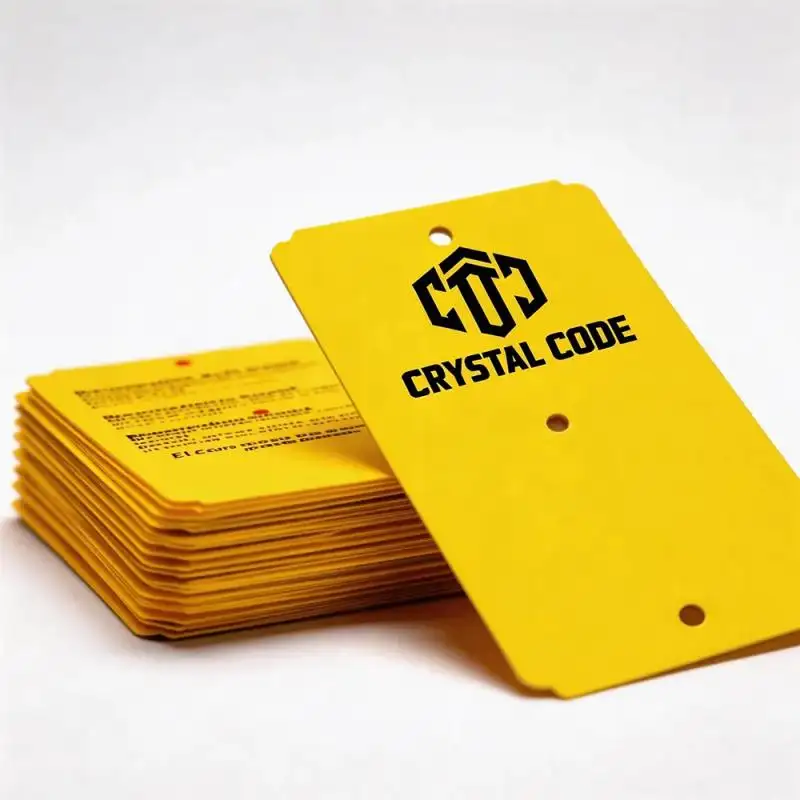


From Donor to Patient: How a Blood Storage Bag Label Enables End-to-End Traceability
By peter, ren
Every transported blood unit contains the same stories: how the blood was collected, how the blood was tested, how the blood was processed and stored, and finally, how the blood was transfused. At the center of this story is the Blood Storage Bag Label. Though small in size, these labels are large in importance. They are vital in the traceability system in transfusion medicine. Blood bags need a label to show a unit of blood is always transfused to the correct patient.
Beginning the Journey: Blood Collection and Donor Identification
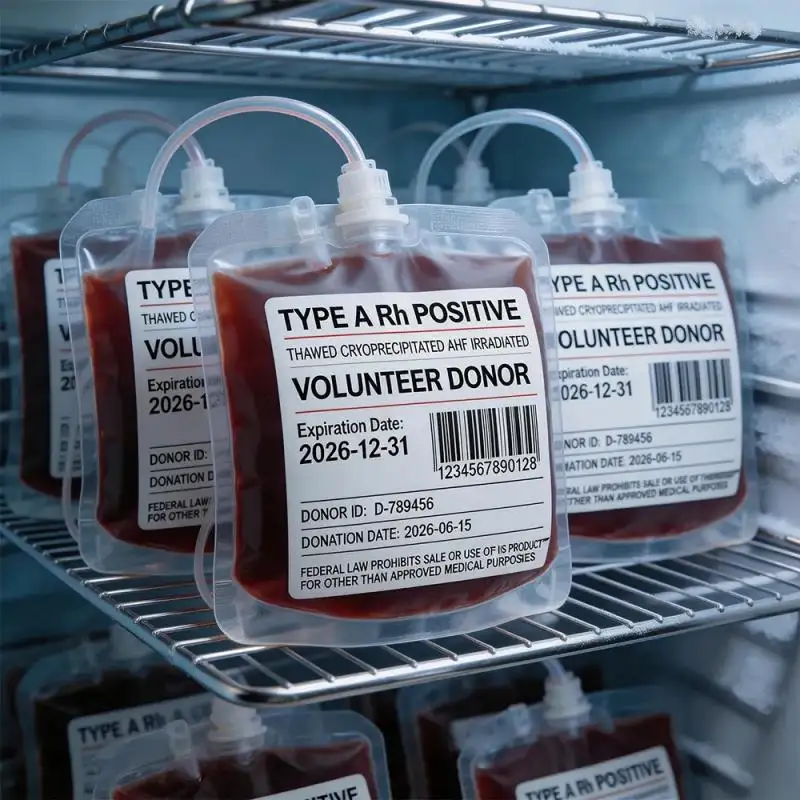
The traceability of blood begins when someone goes to a Blood Collection Center to donate blood. Blood collection containers have Blood Storage Bag Labels attached to them and have a Donation Identification Number (DIN). DINs are the only numbers that are associated with a blood donor.
Several other details are encoded when blood is collected:
•Donor identification number: a unique code that ensures complete donor-to-recipient traceability.
•Collection date and time: a starting point for the shelf-life countdown.
•Blood establishment identifier: a five-digit code that identifies the collection center.
•Type of donation: one of several coded donation types.
The latest Blood Storage Bag Label solutions have adopted and built upon ISBT 128. This is the international standard for terminology, coding, labeling, and identification of medical products of human origin. The development of ISBT 128 allows for every blood unit to be identified consistently across borders. This capability is vital for blood units that may be collected in one country and used in another.
From Collection to Testing: Integrity of the Label
Blood units are subjected to testing to screen for infectious agents and determine blood groups. The Blood Storage Bag Label, after collection, experiences many of its initial challenges during the testing phase. These include the first evidence of laboratory handling, exposure to possible spills, and multiple instances of scanning.
The label is required to have:
•Readable output: Supports high quality printing of barcodes and text so they may be read with minimal chance of workflow disruptions.
•Moisture and fluid protection: Remains legible and protects printed information from the effects of moisture and fluid of varying degrees.
•Chemical protection: Protects printed information from the effects of disinfectants and cleaning agents of laboratory usage.
Labels that fail at this phase result in a series of catastrophic effects. These include incorrect identification of blood types and pronounced transfusion reactions, and blood products being issued that are expired.
Preparation of Components: Splitting and Relabeling
Blood units are often separated into their components: red blood cells, platelets, plasma, and cryoprecipitate. Each component can be used to meet specific clinical requirements. Each Blood Storage Bag Label used for a component being issued retains a link to the original blood unit.
ISBT 128 was designed to accommodate the complexities of separation and provides for standardized and structured data that can include product descriptions and division and pack identifiers. Each component of the blood unit is issued with a Blood Storage Bag Label and a:
•Product description code: Standardized vocabulary of the blood product.
•ABO and RhD grouping: Essential for the determination of blood group compatibility.
•Expiration date: Varies by component type and storage conditions.
•Storage temperature requirements: Each component type needs various things throughout the supply chain to ensure they are maintained at the right handling temperature.

Storage and Inventory Management: The Long Haul
There are strict temperature requirements for the storage of blood components. Red blood cells must be stored at 2 to 6 degrees Celsius. Platelets must be stored at room temperature (20 to 24 degrees Celsius) but are stored with agitation. Plasma must be stored at -30 degrees Celsius or lower.
•During storage of blood components, the Blood Storage Bag Label must meet the following requirements:
•Adhesion at low temperature: Remains bonded on the blood storage bag under low temperature (refrigeration and freezing) without edge lifting or complete detachment.
•Long-term traceability support: Supports the effectiveness of blood inventory control and management during the entire storage period.
•Temperature responsive Physical Integrity: While blood storage bags thermally expand and contract, the label must remain intact.
In blood banks, inventories are managed with the use of specialized systems. Blood storage bag labels containing RFID technology facilitates batch scanning for real time system inventory and the manual stock taking time for blood components is significantly reduced to almost zero. In situations where there is an urgent need for a specific blood type, the staff can locate the blood bag by scanning the system with the label.
Distribution and Transportation: The Label as a Guardian
The Blood Storage Bag Label serves as the primary blood tracking system during the final leg of its journey to a requesting hospital.
•During this leg of the journey, Blood Storage Bag Labels must meet the following requirements:
•Temperature control: Blood storage bags are subjected to temperature control during storage and transport.
•Rough handling: Blood storage bags are transferred from staff to portable storage units and back numerous times.
•Rapid loss of control: When blood storage bags are moved to a warmer environment, moisture (condensation) forms on the storage bag.
Blood Storage Bag Labels assist hospitals and blood centers in showing that blood units have not been exposed to unacceptable temperature conditions during transport. Any damage to the label in this stage of the process may prevent or delay a critical blood transfusion.
The Final Step: Bedside Verification
Once blood is brought to the patient, the Blood Storage Bag Label is there to ensure that the correct blood is going to the correct patient. Several medical staff check the blood bag label as well as patient wristband to verify blood bag and patient's wristband compatibility.
Verification at the bedside comprises the following:
1. Patient verification- The blood bag is meant for the correct patient.
2. Blood type verification - Collect the correct type of blood.
3. Expiration verification- The blood product is not expired.
4. Transfusion documentation- the transfusion is documented in the patient's electronic health record.
International Society for Blood Transfusion (ISBT) 128 Standard applies in this step by allowing transfusion product identification to be documented in the patient's electronic health record. It allows for the electronic transfer of health data and fulfills the complete traceability requirement from the blood donor to the transfusion recipient.
The Label as Documentation
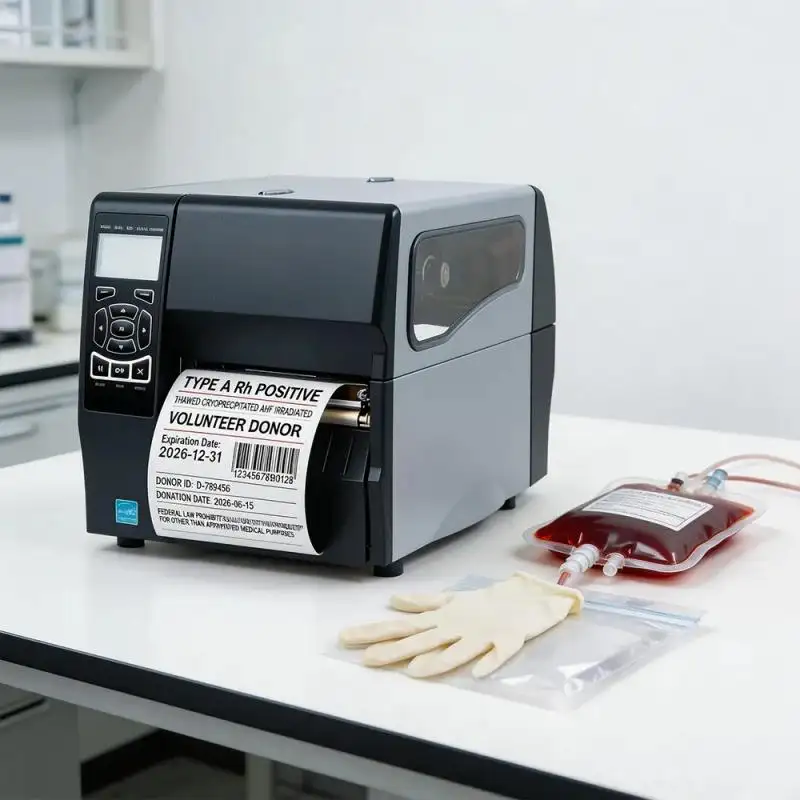
The Blood Storage Bag Label provides a record for regulatory compliance and confines the transfusion to the specific recipient. In the United States, the FDA blood container label regulation requires blood container labels to have machine-readable data, and the container label standard is ISBT 128.
Critical Compliance for Blood Storage Bag Labels
•Certification to ISO 13485: Quality management systems for medical products.
•SGS Testing: Adhesion, clarity and resolution of print, and stable dimensions and moisture.
•ISO 10993: Evaluation of blood bag adhesives.
The Technology Behind the Label
Today's Blood Storage Bag Labels, especially the ones with Crystal Code technology, are secure ID and long-term stable technologies.
The label reportedly has the following:
•Face Material: Features a smooth printable finish with a sharp basic barcode and is clinically safe.
•Layer of Synthetic Polymer: Offers flexibility, tear resistance, and strength.
•Pressure Sensitive Adhesive: Adheres strongly to Blood Bags, Tubing, and Storage Containers.
•Backliner with Silicone coating: Improves speed of removal and accuracy of placement with automated labeling systems.
The performance of Crystal Code technology is supplemented by the following:
•Medical Ink Fixation Coating: Allows the delivery of stable and anchored sharp barcodes and text.
•Batch Consistency: Ensures a high level of service.
•Automated Design: Offers reliable adhesion and correct printing over a broad range of temperatures.
Conclusion: The Unseen Transfusion Safety Guardian
The label design assures the safety of each transfusion and that each blood storage bag contains the correct unit for each patient, despite the label passing through multiple hands in many different facilities and environments.
A lable that maintains stable id, strong adhesion at low thermperatures, high readability, moisture resistance, and traceability, allows for an efficient and safe blood supply chain. The failure of a lable can have lasting effects.
The Blood Storage Bag Label may be small, but its role in healthcare is invaluable. Modern Transfusion medicine's safety, compliance, and trust (that blood will not endanger and will instead save a life) are all built upon it.
FAQs
Q1. What is the significance of ISBT 128 with respect to blood bag labels?
ISBT 128 is a system of standards for blood product identification, which pertains to blood products' global traceability.
Q2. The Blood Storage Bag Label is said to withstand freezing temperatures. Is that correct?
Yes. The Blood Storage Bag Label employs a special adhesive that bonds at low temperatures, ensuring the label will remain adhered to the storage bag at -30 ºC.
Q3. How does the label maintain readability in the event of condensation forming on the bag?
The label is storage bag label is moisture and condensation resistant and has an added protection for the printed text and barcode.
Q4. Are the labels appropriate for both thermal transfer and laser printing?
Yes. The surface of the labels is optimized for both printing techniques, allowing printed barcodes and text to be of excellent print quality on a standard hospital printer.
Q5. Will the label work with electronic inventory management systems?
Yes. The presence of machine-readible bar-codes with optional RFID layers allow for easy integration to bank management systems with real time updates.


- Adhesive Inkjet transparent
- Agodeo inkjet vinyl sticker paper
- AIVA printable vinyl sticker paper
- best inkjet vinyl sticker paper for outdoor use
- cheap printable vinyl sticker paper for outdoor use
- cold chain temperature indicator
- color-change temperature sticker
- Cricut vinyl sticker paper inkjet
- custom vinyl sticker printing
- DIY sticker paper sheets
- durable waterproof sticker paper for inkjet printers
- electronics temperature sticker label
- glossy inkjet vinyl sticker paper
- hot equipment warning sticker
- industrial temperature indicator label
- inkjet sticker paper for Cricut
- matte inkjet sticker paper
- medical temperature indicator sticker
- multi-point irreversible temperature sticker
- Neato vinyl sticker paper
- one-time temperature indicator label
- orajat 1917 printable vinyl
- peak temperature measurement label
- printable vinyl for car decals
- printable vinyl for laptop stickers
- printable vinyl for scrapbooking
- professional quality inkjet vinyl sheets
- reversible temperature monitor label
- self-adhesive printable vinyl
- shipping temperature indicator label
- Tear-resistant sticker paper
- temperature indicator for food safety
- temperature monitoring sticker for transport
- transparent label sticker
- vinyl sticker paper for labels
- waterproof printable vinyl paper
- where to buy inkjet vinyl sticker paper