

-40°C to +260°C: How Industrial High Temperature Labels Stay Strong
By peter, ren
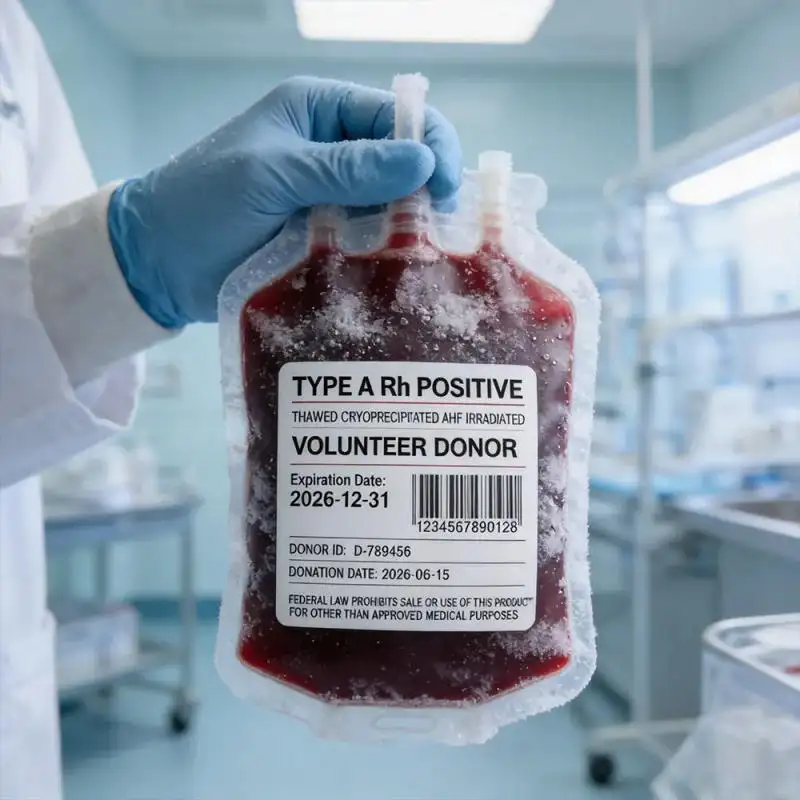
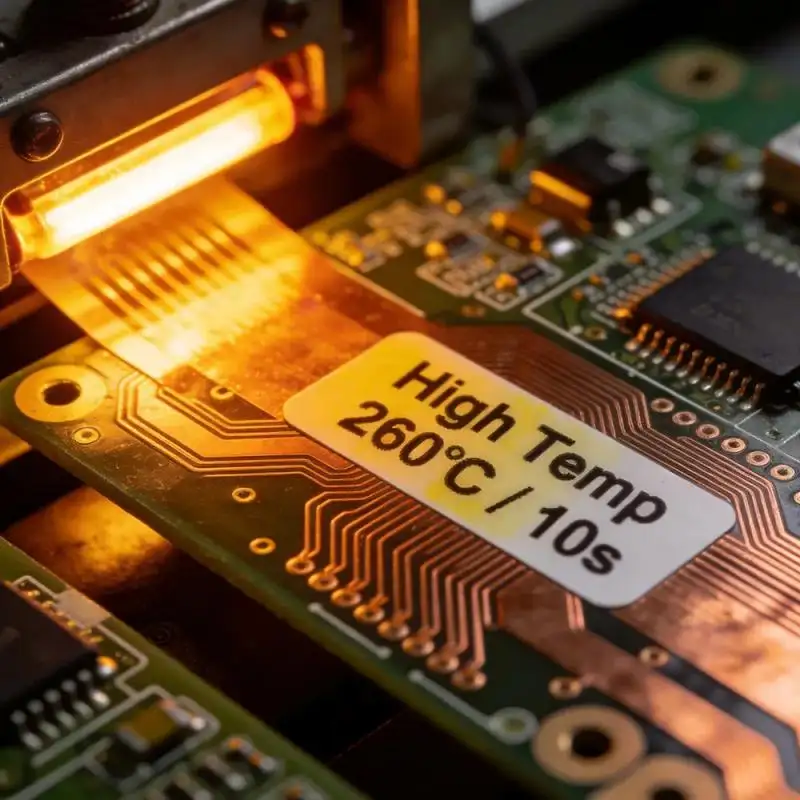
Labeling in today's industries requires something beyond even the best paper labels or adhesive stickers. Consider, for instance, blood samples that get stored in freezers at -40°C or circuit boards that get passed through a 260°C reflow oven. Industrial High Temperature Labels would be extremely useful in these situations. They combine high tech materials, manufacturing, precision and testing to span a thermal gap of 300°C. We review here how these labels maintain the adhesion and legibility of information across this wide and extreme temperature gap.
The Material Foundation: Why Polyester Film Outperforms Ordinary Labels
The base material of any high-temperature label sets the upper and lower limits of the label itself. Industrial High Temperature Labels, for instance, use polyester (polyethylene terephthalate) film rather than paper or standard polyolefin.
•Thermal stability: Polyester film stays stable and maintains integrity of dimensions from -40°C to +260°C.
•Low thermal expansion coefficient: This film will not expand or contract a significant amount, thus will not wrinkle or delaminate when subjected extreme temperature changes.
•Mechanical strength: A tensile strength of 55 MPa and 40% elongation at break ensure that the label will not rip, even when subjected to the most extreme thermal and mechanical stress.
Crystal Code selects a 70 µm polyester film as standard – thick enough to resist puncture but thin enough to feed smoothly through automated lab printers and industrial applicators.
Heat-Resistant Acrylic Adhesive: Bonding to Defy Heat
A glue's quality defines a label's quality. Conventional acrylics lose stick over 120°C. Rubber adhesives become brittle when the mercury drops below 0°C. The rubber-based acrylic adhesives used in our Industrial High-Temperature Labels maintain their integrity across the -40°C to +260°C temperature range.
•Adhesive structure: The adhesive is a cross-linked polymer that undergoes curing. This allows it to bond internally and resist flow at elevated temperatures.
•Broad compatibility: This adhesive bonds well to engineering plastics used in the manufacture of circuit boards and solder masks as well as metals like aluminum and steel without the use of primers.
•Clean removal: This adhesive can be removed without any residue being left behind, provided the instructions are followed. This property is important for the assembly of electronics.
Zero and Crystal Code use calibrated rollers to apply adhesive at a consistent thickness. This ensures the same level of peel and shear strength across all their product lines.
How Printing and Surface Coatings Survive Extreme Heat
Thermal resistance is of little value when printed information (barcodes, IDs, etc.) becomes illegible after exposure. Thermal High-Temperature Labels have this covered with a coating that combines a printed-resin layer with a heat-resistant.
•Thermal Transfer Printing: Labels can be printed using thermally-resistive, resin-based, thermal transfer printing. This is superior to other wax/resin or wax-based thermal transfer printing as it produces clearly printed text and barcodes that do not smudge, even at elevated temperatures up to 260°C.
•Anti-smudge Surface Treatment: A clear over laminate prevents ink from bleeding, or migrating when labels come in contact with oil, cleaning solutions, & condensation.
•High Contrast Even After Aging: A white/matte surface provides a neutral background, which reflects at least 80% of light, allowing barcode scanners, both laser and imager types, to achieve a first pass read of at least 99%, even with background noise of varying contrast.
For medical labs tracking patient blood samples, this means no "no-read"errors after samples go through freeze-thaw or autoclave sterilization.
Chemical and Moisture Protection: Defending Against Hospital and Factory Hazards
Heat is rarely the only stressor. In medical environments, labels encounter alcohol wipes, bleach solutions, and disinfectant sprays. In industry, there is coolant mist, flux remnants, and humidity. Designs of the Industrial High-Temperature Labels deal with the challenges outlined here.
•IHULs integrate a polyester film with an acrylic adhesive: Brief contact with isopropanol and some contact with acetone, Algeria's, and quaternary ammonium compounds (which are some of the most common cleaning agents used in hospitals and in assembly lines) are all tolerable.
•Moisture barrier properties: With water absorption less than 0.3%, the label prevents moisture from the environment from penetrating the adhesive and causing label edge peeling or run out of the printed ink.
•Protection during wet processing: Products can label test tubes and vials that can be immersed in ice water or warm water baths and still retain the adhesion and readability of the label.
Crystal Code has verified chemical resistance by doing standardized wipe tests (ASTM D5402) and humidity aging (85°C/85% RH for 500 hours), in a real world application to guarantee the reliability of the product.
Crystal Code's Manufacturing Edge
Labeling products that function from -40°C to 260°C requires more than good materials; it also calls for precision in the manufacturing and inspection processes. Crystal Code Package Technology (Shanghai) Co., Ltd, uses modern extrusion, coating, and laminating technologies in order to achieve uniformity and accuracy.
•Precision in fabrication of the base polyester film: A thermal and tension control system ensures that the polyester film is fabricated at a ±5% film thickness.
•Surface treatment for print adhesion: Increased surface energy and a molecular level bond for thermal transfer resin is achieved with a corona or chemical primer.
•Roll-to-roll with closed feedback loop: Ensuring that bonding layers are just right -- not too thin (which leads to weak adhesion) or too thick (leading to adhesive oozing out during high temperature) -- is achieved through continuous monitoring of adhesive weight with laser sensors.
•Complete inspection: Finished rolls must be spliceless and must meet specified widths (standard 25 mm or otherwise) and also meet specified liner release force to ensure optimal function of automated labeling machines.
Because Crystal Code operates its own production lines in Guangzhou, it can respond quickly to custom orders while maintaining strict ISO-based quality protocols.
Application Scenarios Where the -40°C to +260°C Range Matters
These labels are not academic exercises – they solve real tracing problems in demanding industries. Common uses include:
•Medical laboratory tracking: Blood tubes, biopsy containers, and cryovials that move from -40°C freezers to +37°C incubators and then to +121°C autoclaves.
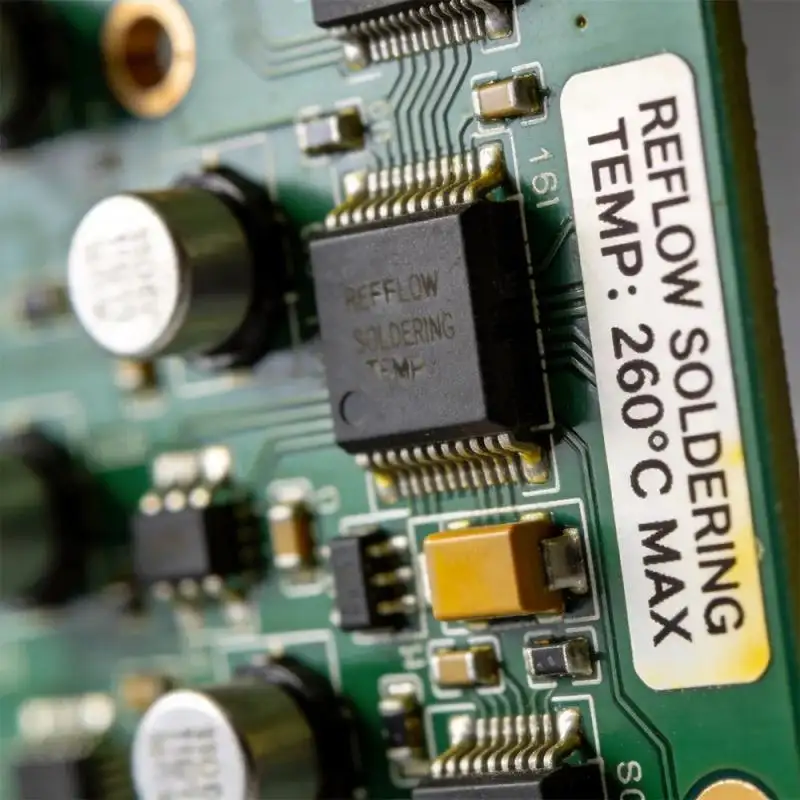
•PCB assembly and reflow soldering: Labels placed on bare boards survive multiple passes through infrared reflow ovens (peak 260°C) and wave soldering machines.
•Automotive under-hood components: Engine sensors, fluid reservoirs and wire harness tags are exposed to the extremes of the winter cold start and summer idle.
•Aerospace and industrial electronics: Component labeling for avionics modules and power supplies needs to pass flame retardancy and thermal cycle tests per IPC and UL standards.
Crystal Code brings you a design advantage in any of the above situations; from curved vials, we offer custom die cutting, and we have materials with flame-retardancy and higher elongation to offer.
Beyond the Label: Crystal Code's Complete Solution Approach
Purchasing Industrial High Temperature Labels is only the first step and the complete solution is what sets Crystal Code apart from the competition. Our complete solution offers the customer a decreased level of risk and reduced costs.
•Expert packaging design: Our in-house team utilize their expertise and experience to enhance the layout and barcoding of the packaging to meet the visual and branding standards of the medical or industrial focus.
•Capable of rapid turnaround: Enhanced slitting and coating allow our innovative team short turnaround times on stock and prototypes of custom design.
•Global Logistics and Management: Our team integrates air, ocean, and express shipments to provide solutions to our customers, including stock with short expiration dates and low landed costs.
•Comprehensive Support: Our Installation adhesive manuals and aids help our customers during and after the installation process. Remote consultation and testing, along with MSDS, are available on request.
Summary: A Label Designed for Thermal Extremes
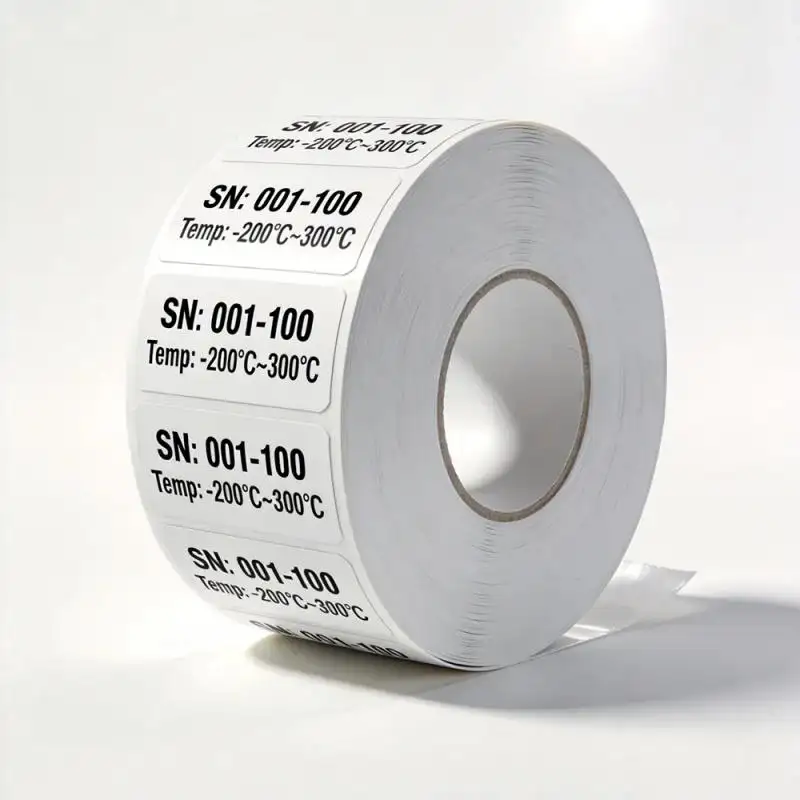
Special attention is needed for material selection, design, and testing for labels manufactured for ultra extreme temperature ranges of -40°C and +260°C. Our Industrial High-Temperature Labels use a polyester film, a heat and age resistant acrylic adhesive, and a special heat-activated thermal transfer print coating. For medical labs, electronics assembly, and automotive suppliers, these labels ensure traceability where other labels do not.
Crystal Code is a flexible and reliable partner for your high-temperature label needs, as it integrates all of the features described above, as well as a responsive custom design and global logistics. Please contact the Crystal Code team directly for a custom quote or to request a detailed specification sheet.
FAQs
Q1: What is the temperature range of the Industrial High Temperature Labels?
A: The temperature range for these labels is -40°C to +260°C.
Q2: What is the preferred printing method for the Industrial High Temperature Labels?
A: The Industrial High Temperature Labels prefer thermal transfer printing with a resin ribbon.
Q3: Will these labels resist chemicals?
A: Yes, along with the majority of common cleaners, alcohols, and dilute acids, the acrylic adhesive and polyester film will keep up.
Q4: Does Crystal Code have the ability to make labels in different shapes or sizes?
A: Yes, we have the ability to customize and include die cutting and label rolls on the custom label rolls for automated labeling.
Q5: Do the labels meet the requirements of different industries?
A: Yes, these labels meet the requirements of the medical (ISO), electronics (UL), and automotive industries.


- Adhesive Inkjet transparent
- Agodeo inkjet vinyl sticker paper
- AIVA printable vinyl sticker paper
- best inkjet vinyl sticker paper for outdoor use
- cheap printable vinyl sticker paper for outdoor use
- cold chain temperature indicator
- color-change temperature sticker
- Cricut vinyl sticker paper inkjet
- custom vinyl sticker printing
- DIY sticker paper sheets
- durable waterproof sticker paper for inkjet printers
- electronics temperature sticker label
- glossy inkjet vinyl sticker paper
- hot equipment warning sticker
- industrial temperature indicator label
- inkjet sticker paper for Cricut
- matte inkjet sticker paper
- medical temperature indicator sticker
- multi-point irreversible temperature sticker
- Neato vinyl sticker paper
- one-time temperature indicator label
- orajat 1917 printable vinyl
- peak temperature measurement label
- printable vinyl for car decals
- printable vinyl for laptop stickers
- printable vinyl for scrapbooking
- professional quality inkjet vinyl sheets
- reversible temperature monitor label
- self-adhesive printable vinyl
- shipping temperature indicator label
- Tear-resistant sticker paper
- temperature indicator for food safety
- temperature monitoring sticker for transport
- transparent label sticker
- vinyl sticker paper for labels
- waterproof printable vinyl paper
- where to buy inkjet vinyl sticker paper