

What Makes a High-Temperature Barcode Label for Circuit Boards Reliable?
By hqt
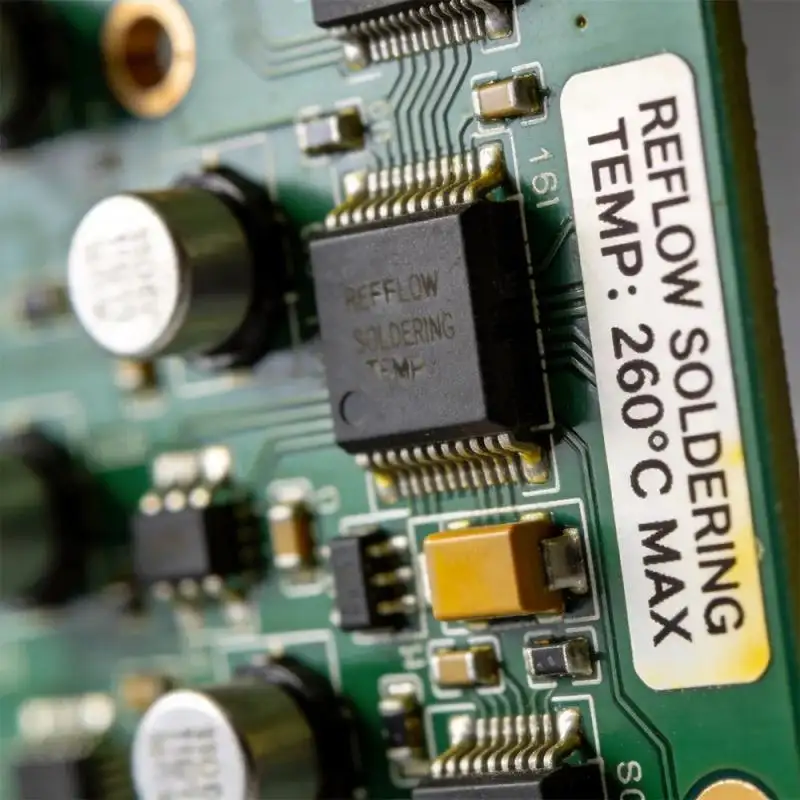
A High-temperature Barcode Label for Circuit Boards is a tracking label built to survive heat, pressure, and chemicals in electronics production. It carries barcodes and text that scanners read at every station. You'll see it in SMT lines, reflow and wave solder, high-temperature bakes, and conformal coating. It supports traceability in automotive electronics, aerospace, power modules, and industrial controls. It looks simple, yet small choices decide success or failure. Materials, adhesives, and print systems all matter. But which factor matters most - and why do some labels fail when others don't? Let's find out.
Why Reliability Starts With Materials And Heat
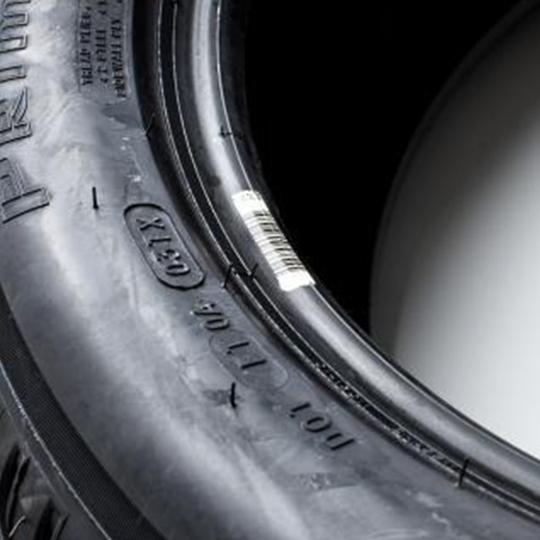
When a label fails, it's almost always about materials meeting temperature. Our facestock is white polyester with a durable topcoat, paired with a rubber bonding adhesive optimized for high heat. This construction was refined in extreme applications - like tire vulcanization - where materials endure 130–210 °C without losing structure. That same discipline translates to high-temperature barcode label for circuit boards used around reflow, selective soldering, and high-temp bake steps.
We focus on three pillars:
Heat integrity: The label stack maintains shape and adhesion under sustained high temperatures. For PCB use, that means stability during preheat and soak zones and resilience to short thermal spikes. If your thermal profile exceeds sustained 210 °C, we'll tune thickness and dwell expectations to keep performance inside safe margins.
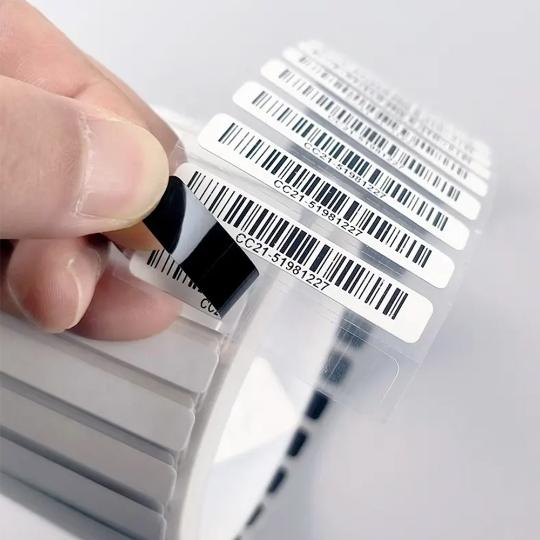
Image durability: Printed with resin ribbons, barcodes and text remain crisp and scannable after heat exposure and mechanical handling. Resin is chosen for its high melting point and abrasion resistance, so your code stays readable when it matters.
Chemical and abrasion resistance: The material system resists water, acids, alkalis, salts, most petroleum oils, and low-fat solvents, and it stands up to rubbing and movement over conveyors, trays, and gloves.

✅ Key Specs At A Glance
• Facestock: White polyester with protective topcoat
• Topcoat Options: 0.10 mm and 0.15 mm (others on request)
• Adhesive: Rubber bonding, engineered for hot surfaces
• Heat Exposure: Proven at 130–210 °C (continuous-use window)
• Readability: Optimized for resin ribbon barcode printing
• Sizes: 44×8 mm, 38×8 mm, or custom with ~3 mm gap
• Core & Handling: 38 mm core; compatible with standard barcode printers
• Storage: −5 °C to 40 °C; ~3 years at room temperature
How Crystal Code Solves Real Factory Pain Points
If you've ever stopped a line because codes won't scan, you know the cost - lost traceability, rework, and scrap. Here are the recurring issues we address and how:
Peel-offs after heat or wash. Labels that look fine when applied can lift after reflow or cleaning. Our rubber bonding adhesive forms a tenacious anchor on typical PCB finishes and trays, holding fast as surfaces expand and contract. The adhesive is selected for temperature swing tolerance and abrasion resistance, so it stays put when boards ride rails or sit in carriers.
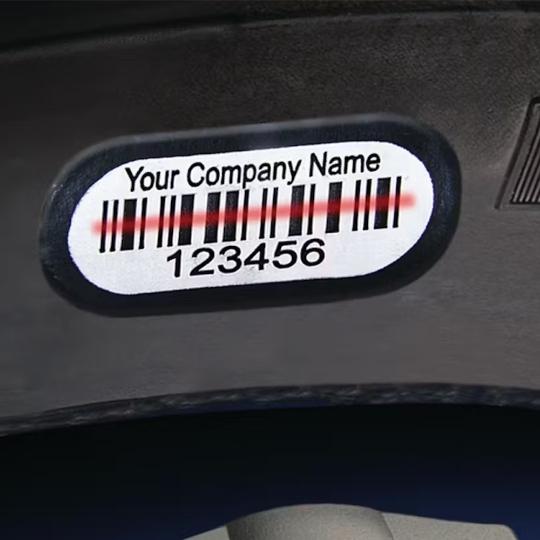
Blurred or faded barcodes. Heat can soften inferior ink systems. Resin ribbon imaging on our topcoat creates sharp, high-contrast bars that withstand high-pressure, high-temperature environments and post-process handling. Result: fewer rescans and fewer line pauses.
Chemical exposure. Flux residues, IPA wipes, or light solvent contact often degrade labels. Our advanced composition is chemically resistant, protecting the print and the adhesive bond through common electronics processes.
Fit and placement constraints. Real boards have tight real estate. We provide slim formats like 44×8 mm or 38×8 mm, plus custom die-cuts, to keep codes accessible without blocking components or fiducials.
Not every reliability win comes from the material. Operations matter too:
✅ Beyond The Label: Service And Speed
• Efficient Production Capacity: State-of-the-art converting lets us turn custom sizes and quantities quickly, so engineering pilots don't stall waiting on labels.
• Professional Packaging & Kitting: We deliver rolls and cores set up for your printers, lanes, and feeders - reducing changeover time.
• Global Logistics: Flexible shipping plans help you cut logistics cost while keeping safety stock healthy across sites.
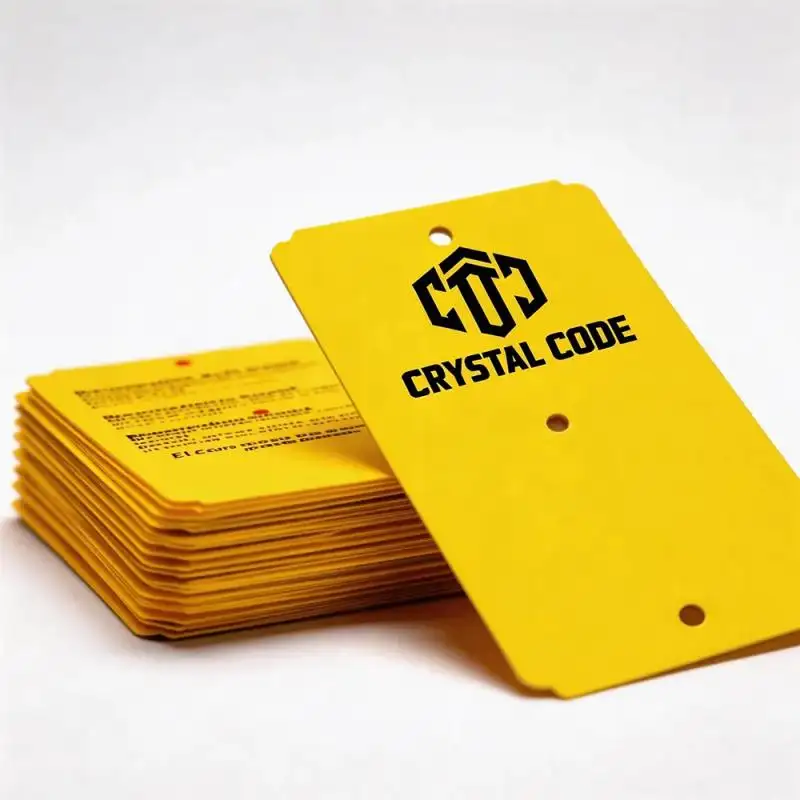
Crystal Code doesn't just ship labels - we stabilize your traceability window. That's how a high-temperature barcode label for circuit boards becomes a process asset, not a consumable headache.
What To Check Before You Approve A Label
A solid vendor qualification saves you from mid-run surprises. Use this quick, practical checklist when you trial any high-temperature barcode label for circuit boards:
1) Match heat profile to label window. Confirm your reflow, wave, bake, or conformal-coat temperatures and dwell times. Our material set is proven 130–210 °C; for higher peaks, we'll recommend dwell-time controls or thicker topcoats to maintain barcode integrity.
2) Validate barcode survivability. Print with resin ribbon, run your actual thermal profile, then measure contrast and scan rate. Aim for high first-pass read rates on your shop scanners, not just lab units.
3) Test surface bond in real flow. Apply on your actual substrate (bare FR-4, solder mask, carrier, or tray), then push through heat, cleaning, and handling. Inspect edges for lift and perform a gentle peel test at the end of line.
4) Check chemical and abrasion exposure. Wipe with your standard cleaners; run the board through the roughest touchpoints. Look for smearing, discoloration, or coating wear.
5) Confirm size, core, and printer fit. Make sure the 38 mm core and chosen width fit your printer path, and that die-cuts clear any AOI or fixture interference.
• If a label passes all five checks, you're set for a stable rollout.
• If it misses one, we'll tune thickness, adhesive, or size and resend samples fast.
Ready To Test? Get Samples
Let's de-risk your next build. Request Crystal Code trial rolls tailored to your board size and heat profile, and we'll include print settings for your barcode printer and resin ribbon. You'll see - reliable tracking doesn't have to fight the process.
Call to Action:
Talk to Crystal Code today about your high-temperature barcode label for circuit boards needs. Share your thermal profile and board surfaces, and we'll recommend a spec - so your codes stay put, stay legible, and keep production moving.


- Adhesive Inkjet transparent
- Agodeo inkjet vinyl sticker paper
- AIVA printable vinyl sticker paper
- best inkjet vinyl sticker paper for outdoor use
- cheap printable vinyl sticker paper for outdoor use
- cold chain temperature indicator
- color-change temperature sticker
- Cricut vinyl sticker paper inkjet
- custom vinyl sticker printing
- DIY sticker paper sheets
- durable waterproof sticker paper for inkjet printers
- electronics temperature sticker label
- glossy inkjet vinyl sticker paper
- hot equipment warning sticker
- industrial temperature indicator label
- inkjet sticker paper for Cricut
- matte inkjet sticker paper
- medical temperature indicator sticker
- multi-point irreversible temperature sticker
- Neato vinyl sticker paper
- one-time temperature indicator label
- orajat 1917 printable vinyl
- peak temperature measurement label
- printable vinyl for car decals
- printable vinyl for laptop stickers
- printable vinyl for scrapbooking
- professional quality inkjet vinyl sheets
- reversible temperature monitor label
- self-adhesive printable vinyl
- shipping temperature indicator label
- Tear-resistant sticker paper
- temperature indicator for food safety
- temperature monitoring sticker for transport
- transparent label sticker
- vinyl sticker paper for labels
- waterproof printable vinyl paper
- where to buy inkjet vinyl sticker paper